


An HR leader at a global insurance group was on a call with me last week, walking through what claims automation looks like. Somewhere in the middle of explaining how his company wants to do auto-adjudication without human claims representatives, he stopped himself.
“And how do we build this in house? We use the context created using thousands of examples from employees. These are the employees’ words that we are just copying.”
Pause.

“Should we be paying those employees more? Should we not be? Is it like a shift differential when you’re...”
And then he trailed off, because there is no end to that sentence. Nobody has written one.
He was not reciting a hot take he read on LinkedIn. He is a working people leader at a company with about a thousand US employees and a call center in Texas, and the question arrived in his own head, mid-sentence, while he was describing something else entirely. Which is how you know it is real.
The moment the question showed up
Here is the setup, and you already know it because you are living inside some version of it.
Health insurers already auto-adjudicate somewhere around 80 to 85% of claims. IDC projects straight-through processing north of 65% across auto, home, and commercial auto by 2026. Lemonade says nearly half its claims resolve without a human touching them. Sixty-five percent of insurers are scaling AI agents in claims this year.
None of that fell out of the sky. Somebody built it. And they built it out of the actual working knowledge of actual claims people: their scripts, their call recordings, their macros, their judgment about which weird edge case is fraud and which one is just a guy whose flight got canceled in Lisbon.
Those people sat in the process interviews. They explained the thing they are good at. They corrected the outputs when the model got it wrong the first eleven times. They flagged the exceptions.
Then the project shipped, and somebody sent an email thanking the working group for their partnership on this important initiative.
That is the whole story. That is the question.
Four questions wearing one coat

Most people who bump into this collapse it into one blurry grievance about AI and fairness. It is actually four questions, and they have completely different answers.
One: contribution. My work product became training data. Do I get anything for that?
Two: extraction. I sat for the interviews, wrote the scripts, corrected the outputs, flagged the edge cases. That was labor, stacked on top of my actual job. Was I paid for that?
Three: supervision. I now oversee three agents doing what I used to do myself. Bigger job or smaller job? Every comp system ever built says supervising humans is a bigger job. Nobody has decided what supervising agents is.
Four: leverage. My output is five times what it was. My pay is exactly what it was. Somebody captured that difference and it was not me.
Question three is the one your HR team could actually fix this quarter. Questions one and two are the ones that eventually end up in front of a judge. Question four is the one you feel in your body long before you can put words to it.
Hollywood struck over this and still lost
I want to be honest with you about how this goes, because hopeful is not the same as useful.
In 2023, the WGA and SAG-AFTRA shut down an entire industry for months, substantially over AI. These are not disorganized people. They are among the most leveraged, most media-savvy, most publicly sympathetic labor groups in the country, and they had the whole world watching.
They won real things. Consent and negotiated compensation for digital replicas. Protections around synthetic performers. Genuine wins.
They won nothing for training data.
The WGA agreement requires studios to disclose if writers’ material was used to train a model. It requires no payment for it. Both guilds “reserved the right” to argue later that training on covered work is prohibited, which is the contract-language version of putting something in a drawer and closing the drawer.
So if you are a claims adjuster in Dalas with no union, no strike fund, and no press coverage, I want to be very clear about your leverage here.
You have none.
Which is not the end of the piece. It is the beginning of the interesting part.
The same work pays $350 an hour outside the building
Here is the thing that made me put my coffee down.
The market has already priced this work. It priced it a while ago. It just refuses to price it inside your building.

Mercor, which recruits people to train AI models, pays an average of about $105 an hour. Specialists go much higher. A psychiatrist designing clinical scenarios and evaluating model outputs against evidence-based standards can pull up to $350 an hour. Mercor’s CEO says training agents “is going to become the largest job category in the world.”
Now hold those two facts next to each other.
A doctor who trains a model as a contractor: $350 an hour.
A claims adjuster who trains a model as an employee: her salary. On a Tuesday. As part of a process improvement initiative. With a catered lunch, if it is a good company.
Same work. Same output. Same asset created at the end of it.
The only variable is which side of the employment relationship you happened to be standing on when they asked you to explain your job.
Nobody is legally wrong here, which is the problem
I know what you want me to say next. I am not going to say it.
Employees have no claim. Work produced in the scope of employment belongs to the employer. Your scripts, your recordings, your annotations, your beautifully weird workaround for the state of Massachusetts: company property. Training a model on company property is a company using its own property. There is no legal theory where you are owed a check.
That is settled, and pretending otherwise helps no one.
The closest historical rhyme is the offshoring wave, and it went badly. In 2015 Disney laid off between 200 and 300 IT workers and made training their H-1B replacements a condition of receiving severance and bonus. Train the person taking your job or forfeit the money. Workers sued under RICO. The court found the allegations insufficient. The practice was upheld as lawful.
Perfectly legal. Also one of the most self-inflicted employer-brand wounds of the decade, a story that is still being told eleven years later, in this very newsletter, as a cautionary tale.
Legality was never the constraint that mattered.
The span of control nobody counted
Let me hand you the version of this that gets a comp committee’s attention, because “it feels unfair” does not.
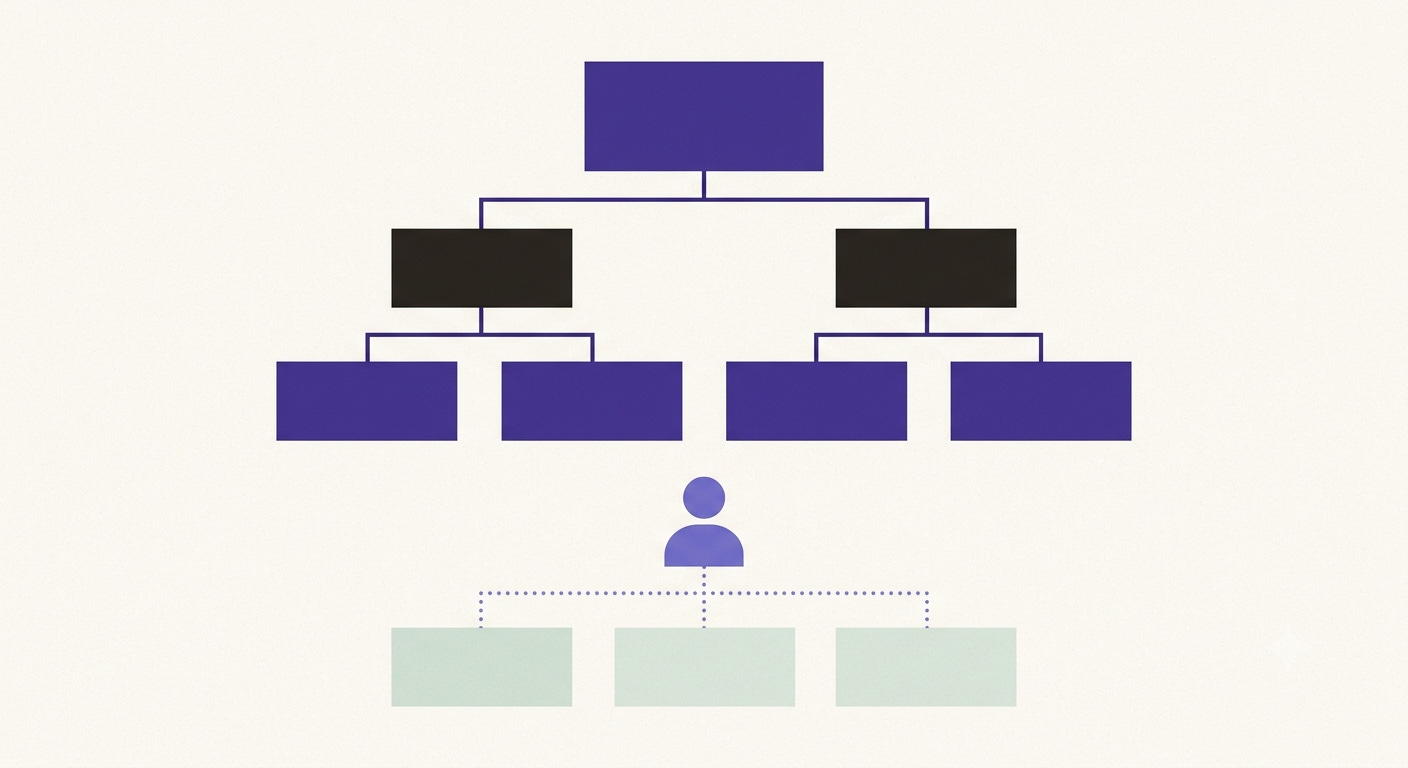
Every compensation structure on earth pays a premium for supervising people. Supervisors earn roughly 13% more than team leads. Second-level supervisors run about 59% above supervisors. Third-level managers, about 73% above that. Managers and senior managers currently average 4.9 direct reports.
We built an entire philosophy of pay around span of control. Decades of it. Job architectures, banding, leveling frameworks, the whole apparatus.
Then we invented a brand new kind of span, handed it to people without asking, and decided it was free.
Because supervising agents is not nothing. You decide what they work on. You check the output. You own the errors. You are the one who gets asked why when something goes sideways at 4:45 on a Friday. That is a load. It is just a load with no band, no title, no line in the job architecture, and no number anywhere.
*I trained it on my own calls.*
*It does the part of my job I was actually known for.*
*Now I check its work.*
*My title didn’t change. Neither did my number.*
*And I’m the one who looks bad when it’s wrong.*
(If that landed, you already know the sound of it.)
Some companies have figured out the mechanism
Here is the part where I stop being grim.
Nobody is solving the training-data contribution question directly yet. But several companies have built machinery that could, which means this is a design problem, not a physics problem.
Brex has paid out more than 225 spot bonuses for AI-driven projects, ranging from $150 for small improvements up to several thousand for the big ones. One of the largest went to a team that took onboarding from a multi-day, four-person slog down to under five minutes.
Omnisend gives standout AI users a 2 to 4% raise, judged on three things: time and cost saved, actual outcome impact, and how widely the workflow they built got adopted by everyone else. That third criterion is the sharp one. It pays you for contributing to the system, not just for personally being fast.
A regional bank ran straight gainsharing. An analyst automated a quarterly variance analysis from 20 hours down to four. The bank handed back 25% of the savings as a $1,125 bonus and reinvested the rest in training.
Shoosmiths, a UK law firm, put up a £1 million bonus pool tied to hitting a million Copilot uses across 1,300 staff, roughly £770 a head.
Notice the quality gap, because it is instructive. Shoosmiths is paying for activity. Activity metrics produce activity theater, and somewhere in that firm there is a paralegal asking Copilot to rhyme things. The bank and Omnisend are paying for realized value and for contribution to the system. Only those two are aimed at the thing that actually matters.
What to do with this if you are the person it happened to
You cannot invoice anyone. Let’s start there.
But you can stop treating the capture step as an administrative chore that got scheduled over your lunch. That process interview is the most valuable hour you will spend this year, for somebody. Go in knowing that. Ask what happens to the output. Ask what the agent gets deployed to do. Ask whether contribution to it shows up anywhere in the review.
You will probably be told nobody has thought about that yet. That is a real answer, and it is more useful than a fake one.
And if you are running the rollout instead of being run over by it: understand that the quality of your agents is capped by how honestly your best people describe their work. Not by your model. Not by your vendor. By whether the person who is genuinely great at the job decides to tell you the whole truth about how she does it, or the tidy version that leaves out the three judgment calls that make her irreplaceable.
She is doing that math. She is doing it right now, in the meeting you scheduled for Thursday.
Decide the compensation question before the capture step, or negotiate it afterward with people who already know what you took.
---
If you got handed an AI rollout, or you got handed a seat in the room where your job gets turned into a workflow diagram, this newsletter is about making that go better than it usually does. No hype, no doom, just what actually works when real people meet real tools. Subscribe at lab.workredesigned.co.