

Okay, confession time.
A few years into my career, I helped light roughly $100K on fire at Google.
Of course we did not call it that. We called it an AR rollout.
And before you click away because your problem is AI, not augmented reality: it is the same story. Same rollout, same mistake, same flatline. AR just got there first.
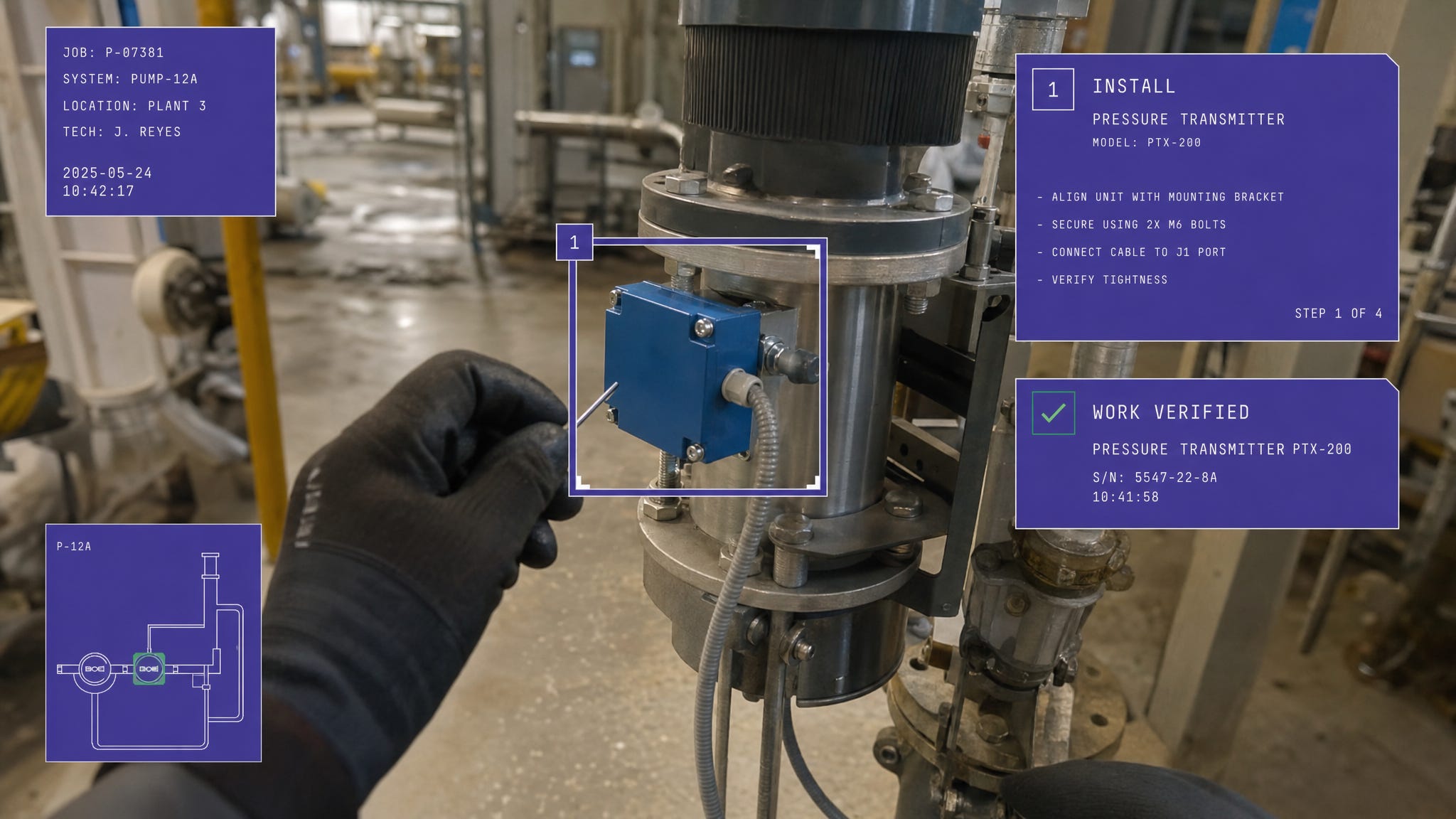
Here’s the scene. We were putting a piece of wearable AR on frontline technical staff.
The thing was genuinely cool. It put instructions right in their field of view: which tools to grab, how to install it, a real-time check on their work. We built a sharp training program. We flew it to our teams around the world. We did everything needed for an enterprise global launch.
And it worked. For about six weeks.
Then it did the thing every rollout does, the thing nobody likes to say out loud.
It quietly face-planted.
Usage chart went up, peaked, and slid right back down like a kid on a water slide. By week eight, people were doing the job the old way again and being very polite about it.
We blamed the training. Of course we did. The training was right there, easy to blame, couldn’t defend itself.
But the training was not the problem. We had made the single most common mistake in the entire field, and I would go on to watch dozens of companies make the exact same one.
We trained the tool, but we never redesigned the job.
Let me say that again because it is the whole ballgame.
We taught people which buttons to press. We never told them what their actual job was now that a machine could press half the buttons for them. So the second the novelty wore off and someone hit a snag, they did the most reasonable thing in the world.
They thought, “you know what, I can do this faster the old way,” and they bailed. The old way was genuinely faster *for them in that moment*, because nobody had redesigned the work so the new way actually won.
(If you have ever rolled something out and watched the usage chart flatline by Q2 while everyone assured you it was “still ramping,” you already know this feeling in your bones. Hi. Welcome. You’re in the right place.)
So here is what I figured out, the expensive way, across a decade of running tech rollouts inside Google, Meta, Uber, YouTube, and DoorDash.
The tool keeps changing and the human pattern does not. Behavior change is not “teach it once and clap.” You do not change how humans work by handing them a slide deck and some encouragement. You change it by quietly rebuilding the work underneath them, so the new way is genuinely easier, feels like an upgrade, and gives people an actual reason to want it.
My favorite proof of this is DoorDash, because it went the opposite direction everyone expected.
We were moving support from all-human phone calls to a tiered setup where AI would handle the boring, repetitive tier-one stuff. The agents were, to put it gently, not thrilled. You can imagine the vibe. “Oh cool, so you built a robot to take my job, love that for me.”
By the end of the rollout, their satisfaction scores went *up*. Significantly.
The difference was one move almost every company skips. We closed the loop. We did not just announce the scary part (”AI is taking some of your calls”) and then wander off to let everyone spiral. We told them the rest of the sentence: “and here is the better work you get to do instead.” The judgment calls. The messy human ones the robot cannot touch. The work the boring volume had been crowding out for years.
Open loop, it reads as a layoff warning. Closed loop, it reads as a promotion. Same exact technology. Wildly different Tuesday.
And that, friend, is why this newsletter exists.
Right now your company is probably spending real money putting AI in front of people, and most of it is landing exactly like my Google AR pilot did. A license, a training, a launch email, and a usage chart that goes flat while everyone nods supportively. The tools keep getting better, but the adoption keeps faceplanting. The gap between those two things is the most expensive problem nobody is actually talking about.
So here is who I am writing for, and it is probably you. Not the executive who signed the contract and went back to their calendar.
The person one level down who actually has to make the thing work. The manager, the team lead, the practicioner who got “drive AI adoption” added to a job that was already full, with no budget and a brave little smile. You can see the rollout wobbling before anyone above you can.
And here is the good news: you are also the person who can actually fix it, even without the fancy title.
Every week I am going to write about the part that actually matters. Why rollouts revert. Why the time AI “saves” mysteriously evaporates back into busywork. How to redesign one workflow so the change sticks. What the research really says once you scrape off the headlines. Plain, useful, occasionally a little spicy, and always aimed at the human doing the work instead of the human who bought the software.
No fifty-tool listicles. No “AI will 10x your synergy” nonsense. Just the behavior side of this whole thing, which, plot twist, is the side that decides whether any of the money was worth it.
If your team got AI and somehow got *busier*, you are absolutely in the right place. Subscribe, and I will see you in your inbox every week.
A tool makes the old job faster. Redesigning the job is what makes it stick. That is the whole thing, and it is what I am going to spend this newsletter showing you how to do.
P.S. Hit reply and tell me where your rollout is stuck right now. I read every single one, and the realest questions become future issues. Misery loves a comment section.